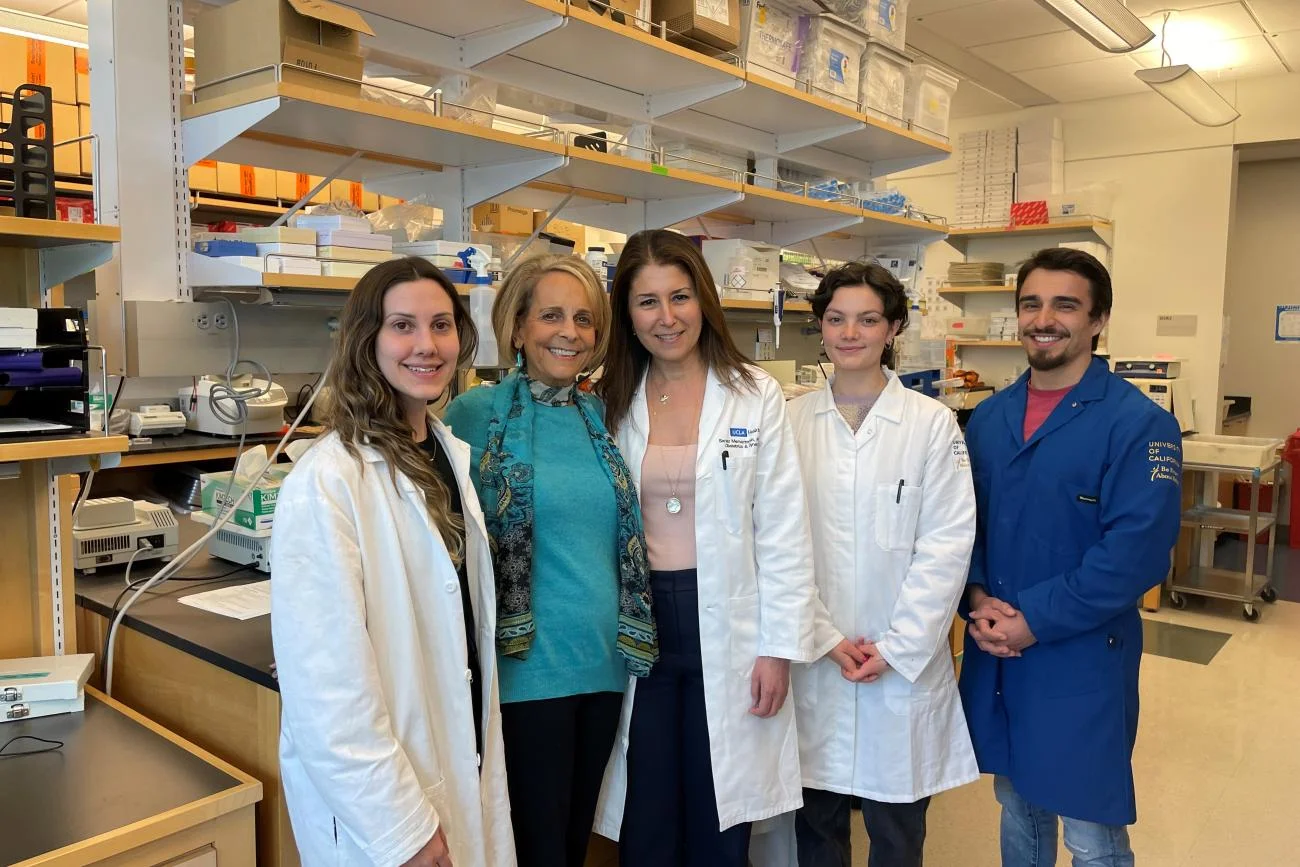
Caption: Dr Memarzadeh in the G.O. Discovery Lab, where her team is developing a new treatments for ovarian cancer
Dr. Sanaz Memarzadeh, professor of obstetrics and gynecology and molecular and medical pharmacology at the David Geffen School of Medicine at UCLA and surgeon-scientist in the UCLA Health Jonsson Comprehensive Cancer Center, has received two grants totaling $4.1 million to develop advanced cell based immune therapies for high-grade serous ovarian cancers that have become resistant to conventional treatments.
High-grade serous ovarian cancer is the most common and most aggressive type of ovarian cancer. Nearly all patients diagnosed with this cancer will relapse after initial treatment. Disease recurrence within six months of platinum-based chemotherapy treatment is categorized as platinum-resistant high-grade serous ovarian cancer, which is highly fatal.
“With the support of these grants, we hope to improve treatment outcomes for patients who have limited treatment options,” said Memarzadeh, who is also director of the G.O. Discovery Lab and a member of the Eli and Edythe Broad Center of Regenerative Medicine and Stem Cell Research at UCLA.
Developing new T-cell receptor therapies
For the first grant, awarded by the National Cancer Institute for $3.4 million, Memarzadeh and a team of researchers from UCLA and the Children’s Hospital of Philadelphia are looking to identify new protein variations in cancer cells caused by RNA dysregulation in platinum-resistant ovarian cancer.
Activating natural killer cells to attack treatment-resistant cancer cells
The second grant, which is a $700,000 award from the United States Department of Veterans Affairs, supports Memarzadeh’s research with a different type of immune cell called natural killer (NK) cells to treat platinum-resistant ovarian cancer.
For more information about both grants, read the full article at UCLA Health News online.
This article has been shared courtesy of UCLA’s G.O. Discovery Lab.